Why Paying Attention to Blood Sugar Matters
Most people assume blood sugar only becomes important once a doctor says the words prediabetes or type 2 diabetes, but that belief misses one of the biggest opportunities for prevention and long-term health.
Why Paying Attention to Blood Sugar Matters Before You Have Prediabetes
Blood sugar regulation affects far more than whether you qualify for a diagnosis on a lab report, because your body uses glucose every single day as a primary source of fuel.
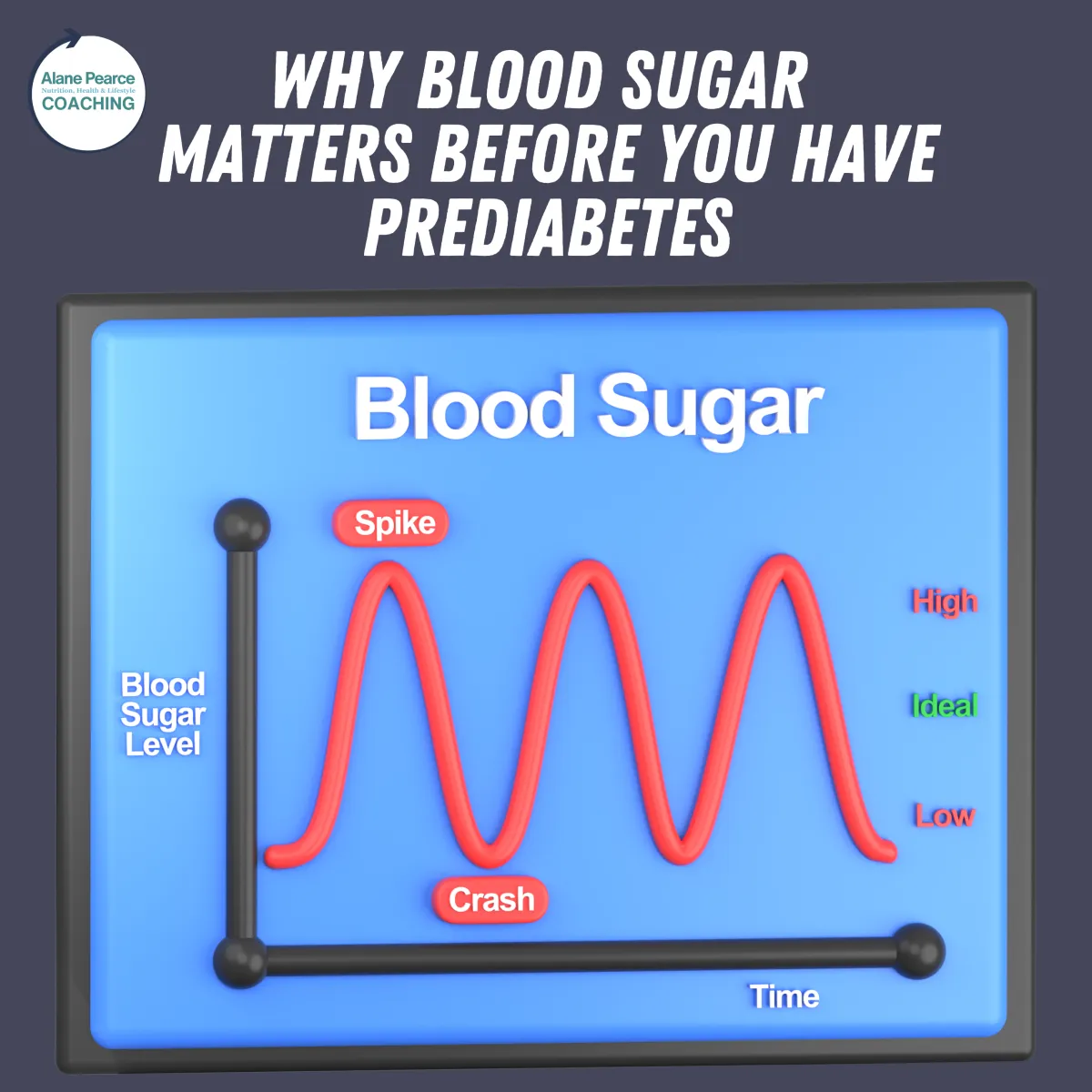
When blood sugar rises too high, drops too low, or swings dramatically throughout the day, the effects often show up long before a formal medical label ever appears. Many of us are told everything is “fine” even though we're experiencing fatigue, cravings, mood swings, stubborn weight gain, brain fog, or increasing inflammation. Or we suspect our symptoms have more to do with hormonal changes or aging. So by the time prediabetes is identified, the body has often been signaling for years that something needs attention.
It's not just about eating sugar
Your blood sugar is not just about dessert, candy, or whether you “eat too much sugar.” It is about how your body responds to all carbohydrates, how efficiently insulin moves glucose into cells, how well your liver helps regulate energy, how your muscles store fuel, and how stress hormones influence the entire system. This means a person can be eating foods they believe are healthy and still be dealing with unstable blood sugar patterns because the issue is often bigger than one ingredient. Sleep deprivation, chronic stress, lack of strength training, irregular eating patterns, and low muscle mass can all contribute to poor glucose control over time. That is why someone may feel confused when they are “trying hard” but still not feeling well. Blood sugar health is a whole-body conversation, not a willpower problem.
The signals your body gives
One of the earliest signs of blood sugar imbalance is often unstable energy. If you feel good after breakfast but crash by 10:30, need caffeine to get through the afternoon, or become exhausted after meals, your body may be struggling to manage incoming fuel efficiently. When glucose rises quickly and then falls sharply, energy can feel unpredictable and unreliable. Many people normalize this cycle because it is common, but common does not always mean optimal. Consistent energy is often one of the first rewards of improving blood sugar habits.
Cravings are another major clue that blood sugar deserves attention before prediabetes enters the picture. When meals are low in protein, missing healthy fats, or too heavy in fast-digesting carbohydrates, blood sugar can rise quickly and then dip, triggering hunger again soon after eating. This often creates the frustrating feeling of being hungry all day despite trying to eat “normally.” It can also drive intense late-night snacking, emotional eating, or constant thoughts about food. Many people blame themselves for lacking discipline, when in reality the body may simply be asking for steadier fuel.
Mood and mental clarity are also deeply connected to glucose stability. The brain requires a steady supply of energy, and dramatic blood sugar fluctuations can affect concentration, patience, emotional resilience, and decision-making. Some people notice they feel anxious, shaky, irritable, or foggy when they have gone too long without eating or after meals that spike and crash them. Others feel mentally dull in the afternoon and assume they are just getting older or overworked. While many factors can influence mood and cognition, blood sugar is one foundational piece that is often overlooked. A steadier internal environment can create a steadier emotional experience.
For women navigating inflammation, hormone shifts, or autoimmune concerns, blood sugar regulation becomes even more important. Elevated glucose and insulin patterns can add stress to an already stressed system, which may worsen fatigue, hunger signals, sleep disruption, and inflammatory symptoms. During perimenopause and menopause, changes in hormones can also make blood sugar more sensitive than it was in earlier years. This is why strategies that used to “work” in your twenties may suddenly feel ineffective now. The answer is not shame or harsher dieting. The answer is learning how your body works today and supporting it accordingly.
But there's good news
The good news is that you do not need to wait for a scary diagnosis to start making meaningful changes. Small, repeatable habits often create the biggest shifts because they improve the daily signals your body receives. Building meals around protein, fiber-rich carbohydrates, and healthy fats can help slow digestion and create steadier energy. Walking after meals, prioritizing sleep, managing stress, and doing regular strength training can improve insulin sensitivity in practical ways. Eating consistently instead of chaotically can also help reduce extreme highs and lows. These are lifestyle skills, not punishment strategies.
It is also important to understand that blood sugar care is not about perfection or obsessively tracking every bite. It is about becoming more aware of cause and effect in your own body. Which breakfasts keep you satisfied for hours, and which ones leave you starving by midmorning? Which evenings of poor sleep lead to stronger cravings the next day? Which movement habits improve your energy and mood the fastest? When you become a student of your own patterns, you gain power without needing extremes.
Prediabetes does not appear overnight, and wellness rarely disappears overnight either. Most health outcomes are built quietly through repeated daily patterns, which means healing and prevention are built the same way. Paying attention to blood sugar early gives you a chance to protect your metabolism, preserve energy, support hormones, reduce inflammation, and feel better now rather than later.
You do not need to wait until something is wrong to care for what is right. In fact, it's best to do something now, rather than later, no matter your age or health.
Living Well means listening to the signals your body gives you, which are usually whispers before they become alarms.
Wonder what your blood sugar signals your body is giving you? Take the Blood Sugar Quiz here - and I'll let you know your results!
